





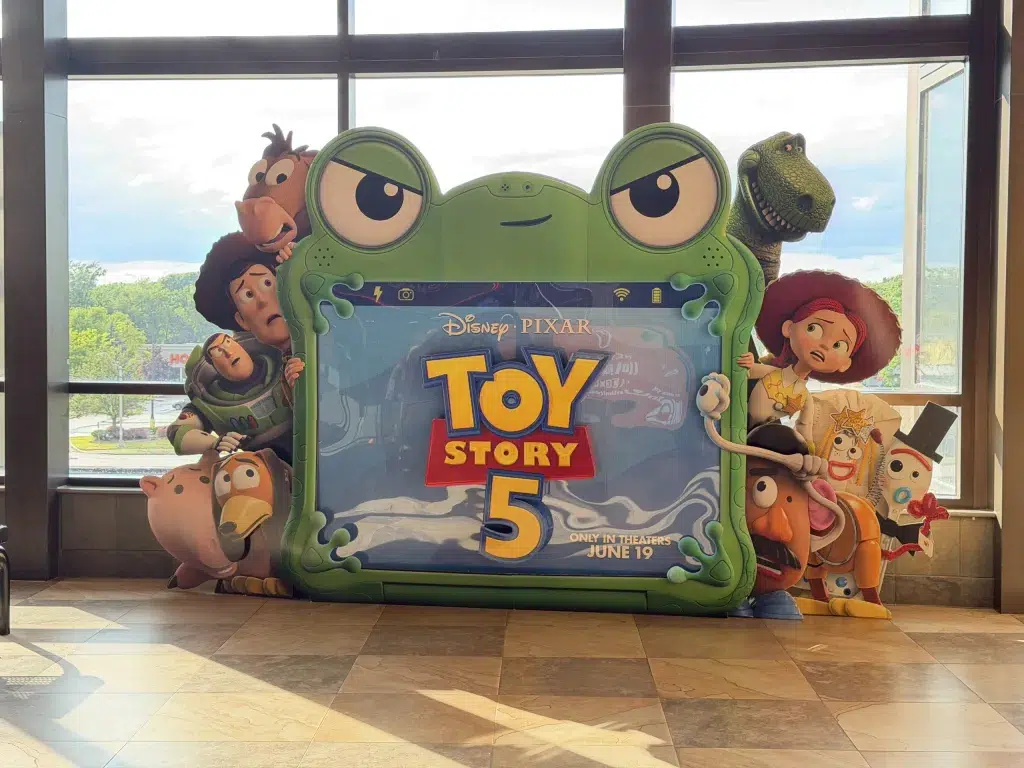
If you have been around as long as I have, there is a good chance that Disney and Pixar’s Toy Story movies have been part of your life for decades.
The original Toy Story introduced audiences to Woody, Buzz Lightyear, and a charming collection of toys voiced by some of Hollywood’s most recognizable actors. We first experienced their world through the bedroom of a young boy named Andy, whose imagination could transform an ordinary afternoon into a daring rescue mission, a journey through outer space, or a showdown in the Wild West.
More than three decades after the original film arrived in theaters, these characters still hold an important place in popular culture. Toy Story 5, released on June 19, 2026, continues that legacy while asking what happens when traditional toys must compete with the increasingly digital world of modern childhood. Films like Toy Story have always known how to pull at our heartstrings. Every person who grew up playing with toys understands what it was like to place a favorite action figure, stuffed animal, doll, or plastic dinosaur into a situation that made perfect sense only within the boundaries of a child’s imagination.
That limitless imagination has always been at the heart of Toy Story, and Toy Story 5 brings it back into the bedroom of a child whose world is beginning to change.
Why Toy Story 5 Feels So Relevant
The most significant aspect of Toy Story 5 is its willingness to address how rapidly childhood is changing.
Children are being introduced to technology at increasingly young ages. Tablets can offer educational programs, creative tools, games, videos, and ways to communicate with friends. Smartphones provide access to enormous libraries of mobile games, while systems such as the Nintendo Switch allow children to carry digital entertainment almost anywhere.
Technology is not automatically harmful, and I do not believe Toy Story 5 is simply arguing that every screen is bad. Instead, the film raises an important question about balance. What might children lose when digital entertainment begins replacing physical play, outdoor exploration, and face-to-face friendships? In my opinion, this is where Toy Story 5 finds its strongest purpose.
The conflict is not only about whether Bonnie will continue playing with Jessie, Buzz, Rex, Slinky Dog, Bullseye, the Potato Heads, and the rest of the familiar group. It is about whether a child can maintain a healthy connection to imagination while also entering a world increasingly shaped by digital communication. Bonnie is among the last children in her social circle to receive a tablet. The device is supposed to help her learn and connect with other children, but technology cannot automatically provide the kind of genuine friendship she needs. A tablet may help someone communicate, but it cannot guarantee that the people on the other side of the screen will be kind, supportive, or sincere.
That distinction gives the movie a surprisingly timely emotional foundation.
Is Toy Story 5 Appropriate for Children?
Toy Story 5 is still a family movie, but its message may resonate differently depending on the viewer’s age.
Children can enjoy the colorful animation, familiar characters, humor, and adventure. Parents may recognize the struggles surrounding screen time, online communication, peer pressure, and the challenge of helping children develop meaningful friendships. Longtime fans may respond most strongly to the nostalgia. This is where it hit me the most.
Many adults watching Toy Story 5 grew up alongside Andy. We remember a childhood before tablets and smartphones became everyday fixtures. We remember creating elaborate stories with toys and carrying those stories from one afternoon into the next. Watching Bonnie stand between imaginative play and a rapidly expanding digital world may therefore feel surprisingly personal.
My Spoiler-Free Opinion of Toy Story 5
Without revealing any major developments, I believe Toy Story 5 succeeds because it understands that the greatest threat to the toys is not an evil object. It is change.
Lilypad represents an enormous shift in the way children play, communicate, and understand the world. The movie uses that conflict to explore friendship, loneliness, imagination, and the pressure children may feel to keep up with their peers. The film remains funny, colorful, and energetic, but its strongest moments come from the questions beneath the adventure.
Can technology bring people together while still leaving them emotionally isolated? Can traditional play remain meaningful in a digital world? Is growing beyond toys an unavoidable part of childhood, or are children being encouraged to make that transition too quickly? Those questions give Toy Story 5 a reason to exist beyond nostalgia.
It may feature characters we have known for decades, but the challenge they face belongs entirely to the present. Toy Story 5 honors the imagination that made the original film so memorable while recognizing that the world surrounding these characters has changed dramatically. It gives Jessie a well-deserved opportunity to lead, allows Buzz and Woody to remain important parts of the story, and places Bonnie at the center of a conflict many modern families will understand. Most importantly, the movie reminds us why toys mattered in the first place.
They were never merely pieces of plastic, fabric, or stuffing. They were characters in stories we created ourselves. They helped children explore danger, friendship, courage, loss, and adventure long before they had the words to understand those ideas. Technology may continue to change the way children play, but Toy Story 5 makes a heartfelt case for preserving the imagination, creativity, and genuine human connection that no screen can fully replace.